The Honeybee Lifecycle In Your Garden: Explained
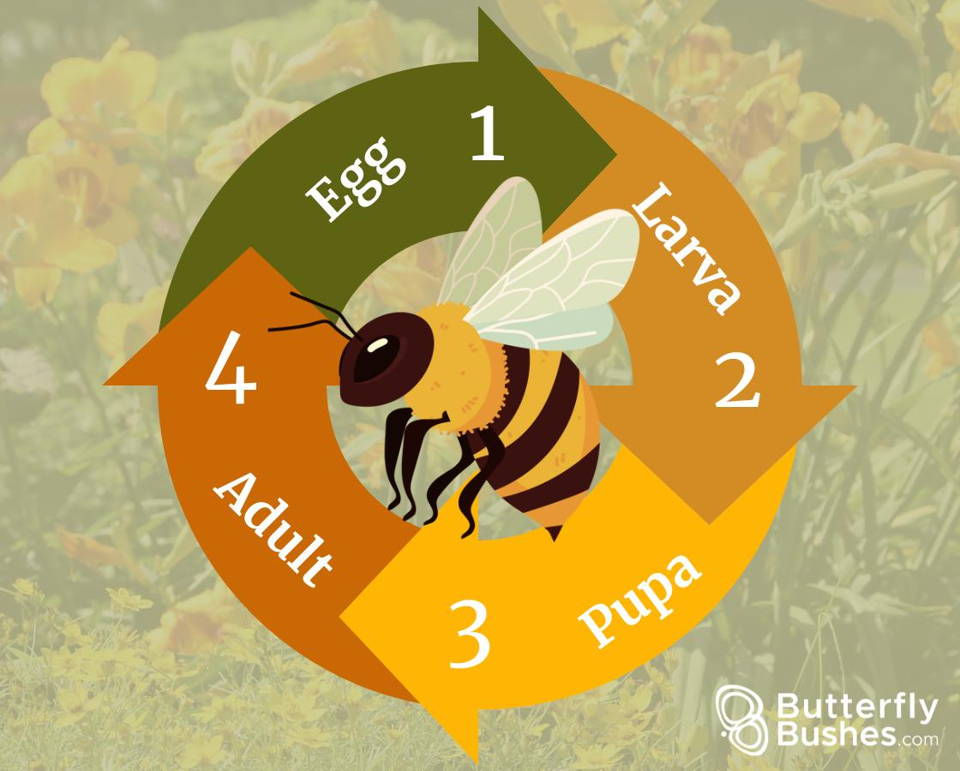
Honeybee lifecycle graphic

The buzzing of honeybees is a signal to gardeners that spring has arrived. Honeybees have a distinct hierarchy within their hive colony, consisting of 3 different adult bees. The queen bee (female, largest bee in the colony and responsible for laying all eggs), the worker bee (female, small in size and responsible for cleaning and building the hive), and the drone bee (male, responsible for mating and fertilizing queen bee eggs). They feed on pollen and nectar-rich plants to support their colony all the way until fall, before they gather inside the hive before winter. Through this process, honeybees pollinate thousands of flowers each day, serving as a crucial part of our ecosystem. Here, we'll explain just how the honeybee lifecycle unfolds in your garden and learn how you can support these buzzing pollinators through every stage.
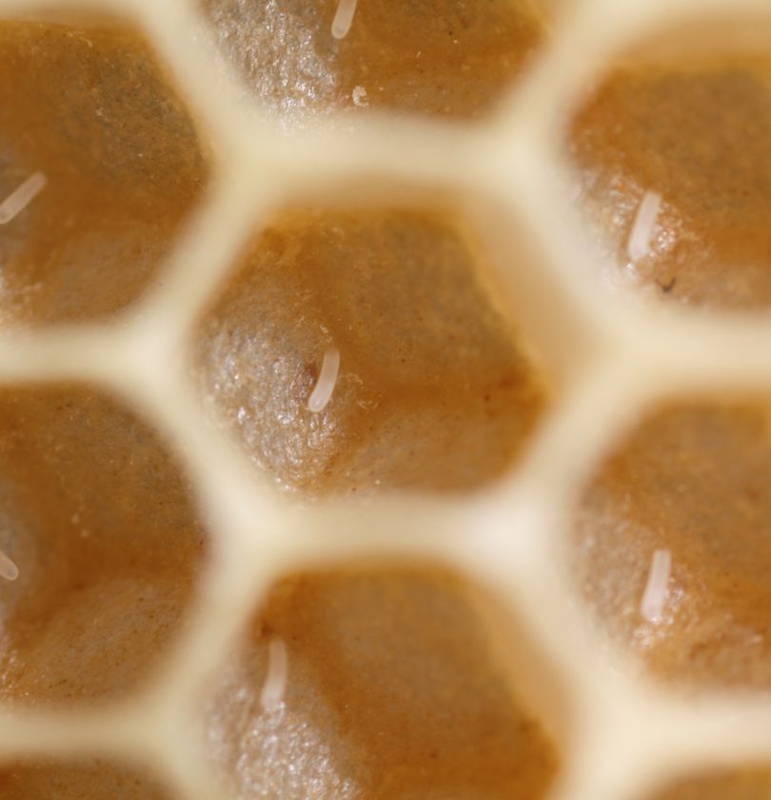

Close up image of honeycomb cells with fertilized honeybee eggs

Stage #1: Egg

1-3 days

Honeybees start their cycle as an egg in the honeycomb cells of their hive. The queen will fly outside of the hive in a swarm of drone bees to mate, then returning to the hive and laying (1) fertilized egg per honeycomb cell. These eggs are small, about the size of a grain of rice, and are laid upright before they fall and move onto the larva stage.

Interesting fact: queen bees will only mate once in their life, using one mating swarm to fertilize her eggs throughout her entire lifetime.

Stage #2: Larva

4-10 days

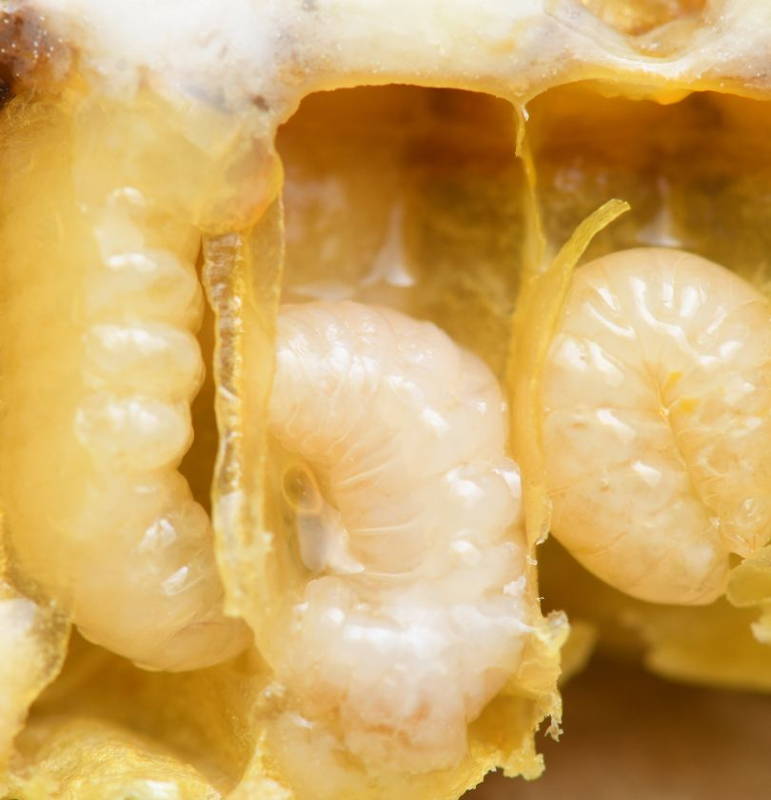
Next, the honeybee egg will hatch and become a larva within the honeycomb cell. Honeybees are growing rapidly at this stage and require plenty of fuel (food) to keep going. During this time, worker bees will tend to the larvae and feed them honey stored within the hive. Once the larvae reach a certain size, the worker bees will then cover them with a wax coating that creates a more secure environment, similar to a chrysalis.

Interesting fact: during this process, worker bees can detect unhealthy honeybee larvae and relocate them outside the hive to die before moving on to the next stage of the lifecycle.
Close up image of honeybee larvae in honeycomb cell
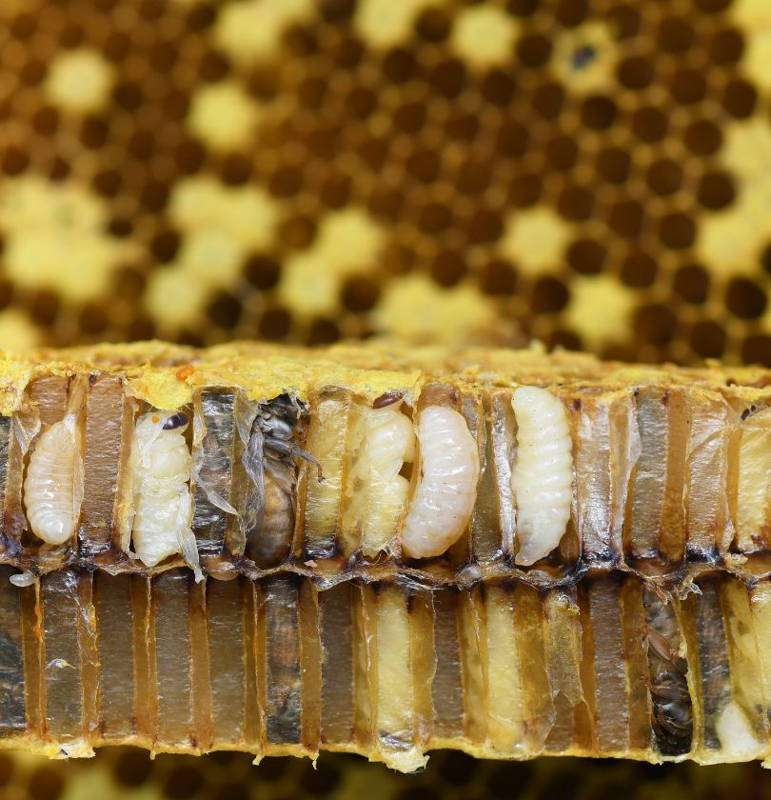
Honeybee pupa in honeycomb cells

Stage #3: Pupa

10-20 days, depending on bee

As the larvae continue to grow and are covered by worker bees, they reach the pupa stage of the bee lifecycle. This is when the exoskeleton begins to form, along with the eyes, legs, and wings. They complete this process still within the honeycomb cells within the hive. The time spent in the pupa stage can vary depending on the type of honeybee:

  • Queen: Pupa around 10-15 days.
  • Worker: Pupa around 10-20 days.
  • Drone: Pupa around 10-23 days.

Stage #4: Adult

15-25 days, depending on bee

The final stage of the honeybee lifecycle is the adult stage, when bees begin to chew through the wax coating around them and enter the hive. At this stage, their exoskeleton is still a bit soft and needs some more time to harden in the hive before flying. As they grow and their exoskeleton hardens, they begin working in the hive, being fed by other worker bees while building up their strength to swarm and reproduce, work within the hive, or leave the hive in search of another. The time spent as an adult can vary for the honeybee: 

  • Queen: Adult up to 3 years, with some living up to 5 years! The longest living of the honeybees.
  • Worker: Adult anywhere between 4 weeks to 6 months.
  • Drone: Adult up to up to 60 days. Will die after mating.
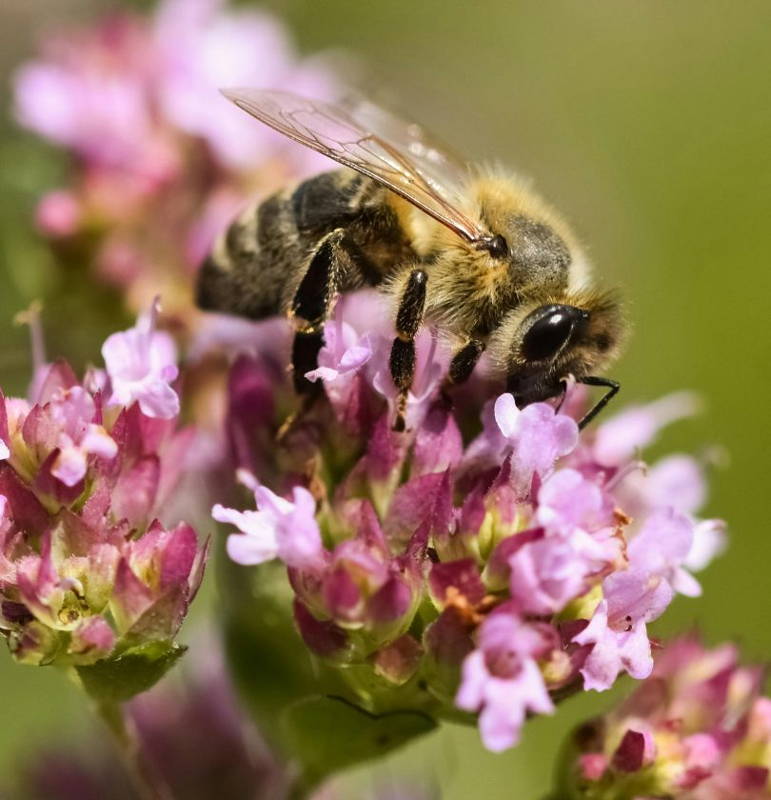
Adult honeybee feeding on the nectar and pollen from tiny pink flowers

Garden Plants For Bees & Other Pollinators:

Sale Off
Frosty green foliage from mountain mint covered in pollinators
$16.99$15.99
Sale Off
'Jacob Cline' Bee Balm has classic red flowers
$17.99

Lindsey Griffith Author with garden container surrounded by ferns

Written by: Lindsey Griffith

Lindsey is a Zone 6B gardener and pollinator advocate, educating and providing resource material for building gardens that support pollinators like bees, butterflies, hummingbirds, and other beneficial insects. She is educated in landscape design, pollinator preservation, and the foundations of gardening and is ready to help keep your garden buzzing with activity!

If you have questions, let us know! Comment your questions below or reach out through our contact us page. We have a team of horticulturalists who are here to help!